Where Was Your Pennsylvania Ancestor in 1876? Researching the Centennial Year
Find your Pennsylvania ancestor in 1876, the Centennial year. Use the 1870/1880 census, city directories, naturalization, and newspapers to trace them.

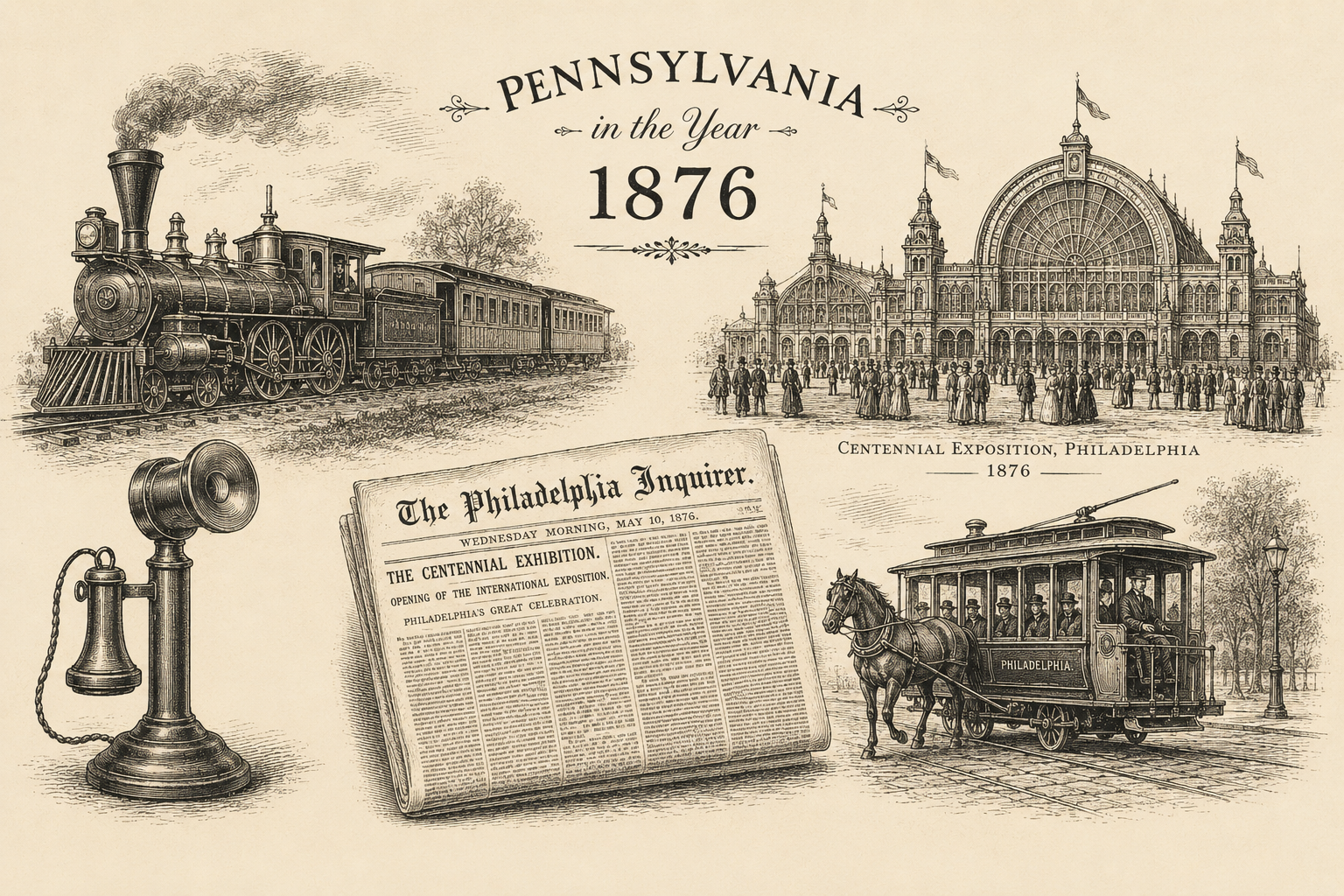
In 1876, the nation turned one hundred, and Pennsylvania stood at the center of the celebration. The Centennial Exhibition opened in Fairmount Park, Philadelphia — the first official World's Fair held in the United States — and drew nearly ten million visitors between May and November. If your ancestor lived in Pennsylvania that year, the records are far richer than the silent decades before, and there is a real chance your ancestor walked the Exhibition grounds themselves.
The Centennial year sits in one of the best-documented stretches of nineteenth-century research. The 1870 and 1880 federal censuses bracket it, city directories were thriving, naturalization courts were busy, and Pennsylvania's newspapers covered the Exhibition in exhaustive detail. This post shows you which records survive for 1876, what each one reveals, and how to use the Centennial itself as a research thread.
What 1876 Was: The Centennial
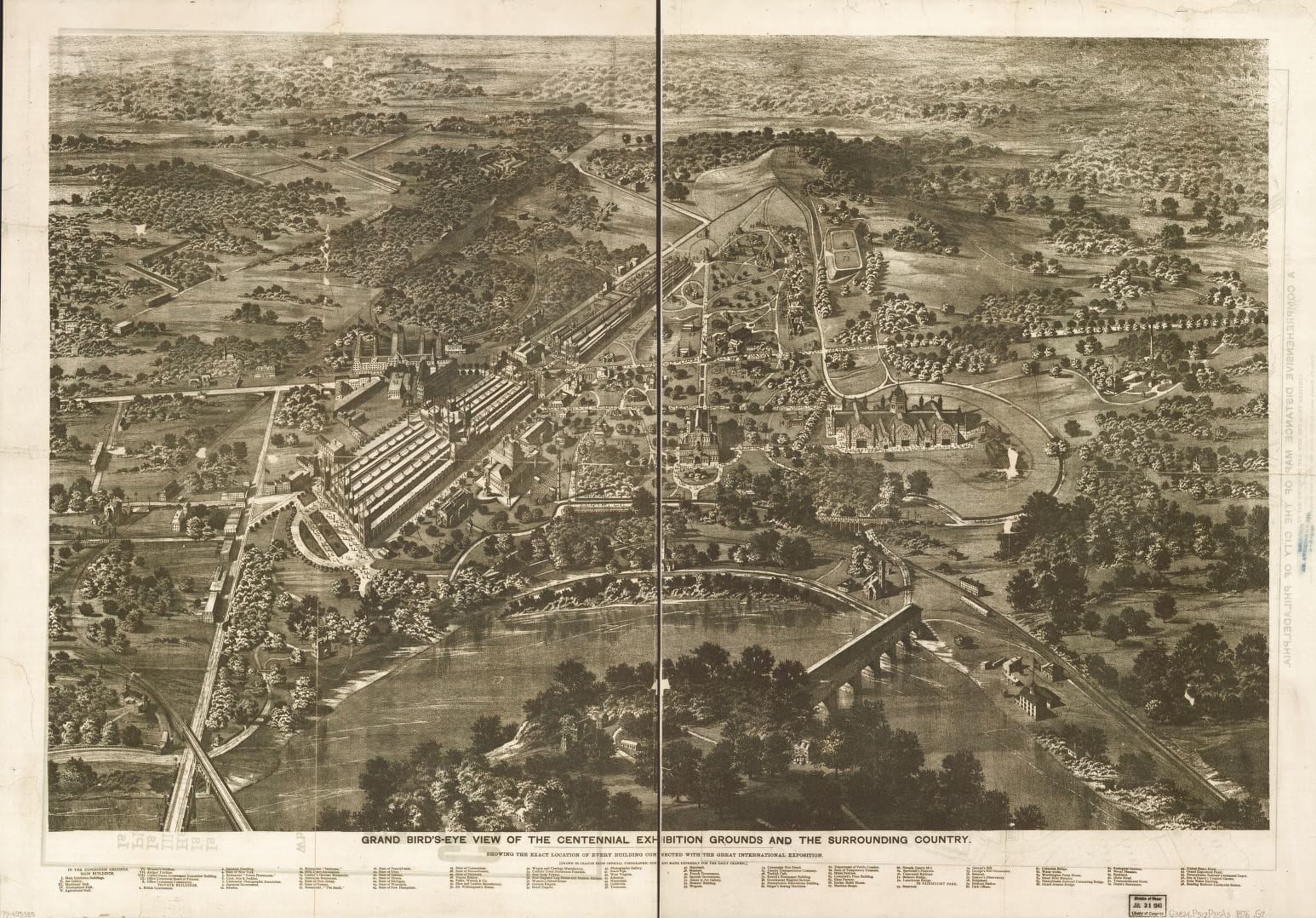
The Centennial Exhibition ran from May 10 to November 10, 1876, on roughly 285 acres of Fairmount Park. It was the first World's Fair on American soil, built to mark a hundred years of independence, and it introduced the public to technologies that would define the coming decades — Alexander Graham Bell's telephone, the Corliss steam engine, the typewriter, and the arm and torch of the Statue of Liberty, displayed to raise funds for the rest of the statue.
Nearly ten million visitors passed through the gates over six months. Many came by rail from across Pennsylvania and the country. For a researcher, that is not just nice-to-know history: it means newspapers, excursion records, and family lore from 1876 frequently mention the trip to Philadelphia. The Centennial is a fixed national moment you can anchor an ancestor to.
Why 1876 Is a Rich Research Year
Unlike the 1820s, the 1870s leave a researcher plenty to work with. Three developments make the difference: the post-1850 census named every person in a household, city directories had become detailed annual publications, and the courts and newspapers of an industrializing Pennsylvania generated paper at a scale earlier generations never did.
The Records That Document 1876
The 1870 and 1880 Federal Census
The census brackets the Centennial, and both years name every member of the household — a sharp break from the pre-1850 returns. The 1870 census records each person's name, age, sex, race, occupation, value of real estate and personal property, and state or country of birth. It also flags whether a person's father or mother was foreign-born, a useful pointer toward immigrant origins.
If your ancestor lived in Philadelphia in 1870, there may be two census records for them — and most researchers only ever find one.
The 1880 census is even more valuable genealogically: it adds each person's relationship to the head of household — the first census to do so — and records the birthplaces of each person's father and mother. For an ancestor living through 1876, reading both censuses together gives you the family before and after the Centennial year, including children born, marriages, and household members who came and went.
City Directories
By 1876, city directories were among the most useful annual records in Pennsylvania, and Philadelphia's were especially thorough. A directory lists residents alphabetically with their home address and occupation, often their place of business, and sometimes a widow's late husband's name. Because they were published nearly every year, directories fill the gaps between the decennial censuses — you can track an ancestor's address and occupation year by year through the 1870s, watch a business open, or pinpoint the year a man died by the year his widow first appears alone.
Philadelphia, Pittsburgh, Harrisburg, Reading, and other Pennsylvania cities all produced directories in this era. Many are digitized; others survive at local libraries and historical societies.
Naturalization Records
The 1870s were a period of heavy immigration, and naturalization in Pennsylvania happened in the courts — Quarter Sessions, Common Pleas, and federal district courts. A naturalization record can document an immigrant ancestor's arrival, country of origin, and the date they declared intention or were admitted to citizenship. Before 1906, naturalization records were less standardized and often brief, but they place an immigrant ancestor in a specific Pennsylvania county and court. Check the county courthouse and the Pennsylvania State Archives for surviving court naturalization records.
Newspapers
Pennsylvania newspapers covered 1876 heavily, and not only the Exhibition. Beyond the Centennial coverage itself, newspapers carried marriage and death notices, legal advertisements, sheriff's sales, and local news that names ordinary people. For an ancestor in 1876, search the newspapers of their county and the major Philadelphia papers. Chronicling America (free, from the Library of Congress) and Newspapers.com (subscription, often available through libraries) are the best starting points for Pennsylvania titles.
And if you want to feel like you were at the Centennial Exhibition along with your ancestor, check out the Free Library of Philadelphia's photo collection. It's an incredible look in the Gilded Age.
A Step-by-Step Approach for 1876
- Read the 1870 and 1880 census together to establish the household before and after the Centennial, using 1880's relationship column to confirm family structure.
- Work the city directories for your ancestor's town year by year through the 1870s to track address, occupation, and changes the census misses.
- Search naturalization records in the county courts and the State Archives if your ancestor was an immigrant.
- Search the newspapers of the ancestor's county and the Philadelphia papers for vital notices, legal ads, and any mention of a Centennial trip.
- Check for surviving church and county marriage records, which some Pennsylvania counties began keeping in this era.
Pennsylvania-Specific Considerations
Philadelphia is a special case. The city and county of Philadelphia were consolidated in 1854, and the volume and variety of records — directories, naturalizations, newspapers, court records — is enormous. If your ancestor was in Philadelphia in 1876, expect deep records but also a crowded field of same-named people; use addresses from directories to distinguish them.
Directories are underused. Most researchers stop at the census. The annual city directory is the tool that fills the years between, and for an industrializing 1876 Pennsylvania it is often the fastest way to track a working class family.
Naturalization was decentralized. Before 1906, any court of record could naturalize. If you can't find a record in one court, check the others in the same county, and check both county and federal courts.
For the records, archives, and repositories that hold Pennsylvania's nineteenth-century collections — and how to plan a research trip to use them — see Archives in Pennsylvania for Genealogy Research by Denyse Allen.
Once you've placed your ancestor in the Centennial year, Chronicle Makers is where family historians turn that research into a written family story.
Frequently Asked Questions
What was the Centennial Exhibition of 1876?
The Centennial Exhibition was the first official World's Fair held in the United States, running from May 10 to November 10, 1876, in Fairmount Park, Philadelphia, to mark one hundred years of American independence. It drew nearly ten million visitors and introduced the public to inventions including Bell's telephone and the Corliss steam engine.
What records exist for a Pennsylvania ancestor in 1876?
The 1870 and 1880 federal censuses bracket the year and name every household member. City directories track address and occupation almost annually. Naturalization records document immigrant ancestors. Newspapers carry vital notices and local news. Some counties also kept marriage records by this period.
What is the difference between the 1870 and 1880 census?
Both name every person in a household. The 1880 census adds two key details the 1870 census lacks: each person's relationship to the head of household, and the birthplaces of each person's father and mother. Reading both together brackets the Centennial year and confirms family structure. Also pay attention to the two 1870 Philadelphia censuses - note the differences and cite them!
How do I use city directories for 1870s Pennsylvania research?
City directories list residents alphabetically with address and occupation, published nearly every year. They fill the gaps between censuses, let you track an ancestor's movements and work year by year, and can pinpoint a death by the year a widow first appears alone. Philadelphia, Pittsburgh, and other Pennsylvania cities all produced them.
Where do I find Pennsylvania naturalization records from this period?
Before 1906, naturalization happened in the courts — Quarter Sessions, Common Pleas, and federal district courts. Check the county courthouse and the Pennsylvania State Archives. Because any court of record could naturalize, search multiple courts in the same county if your first search comes up empty.