Where Was Your Pennsylvania Ancestor in 1926? Researching the Sesquicentennial Year
Researching a Pennsylvania ancestor in 1926? WWI draft cards, the 1920/1930 census, SS-5 applications, and passenger lists make this a records-rich year. (153)

In 1926, the United States turned one hundred and fifty, and Philadelphia hosted the party again — the Sesquicentennial International Exposition in South Philadelphia. It is far less remembered than the 1876 Centennial, and for good reason: it rained on 107 of the 184 days it was open, drew only about 6.4 million of the 10 million visitors planners expected, and lost more than twenty million dollars. But the records that document a Pennsylvania ancestor in 1926 are some of the most detailed in all of genealogy.
This is the decade where twentieth-century records take over. The 1920 and 1930 censuses bracket the year, World War I draft cards capture nearly every adult man of the era, Social Security records begin a decade later, and immigration through the Port of Philadelphia left rich passenger and naturalization trails. For most researchers, 1926 is where ancestors finally start telling you their ages, addresses, employers, and origins directly.
What 1926 Was: The Sesquicentennial
The Sesquicentennial International Exposition opened on June 1, 1926, in what is now South Philadelphia near the present sports complex. It was meant to rival the 1876 Centennial and mark a hundred and fifty years of independence, complete with a towering illuminated Liberty Bell replica over the main entrance.
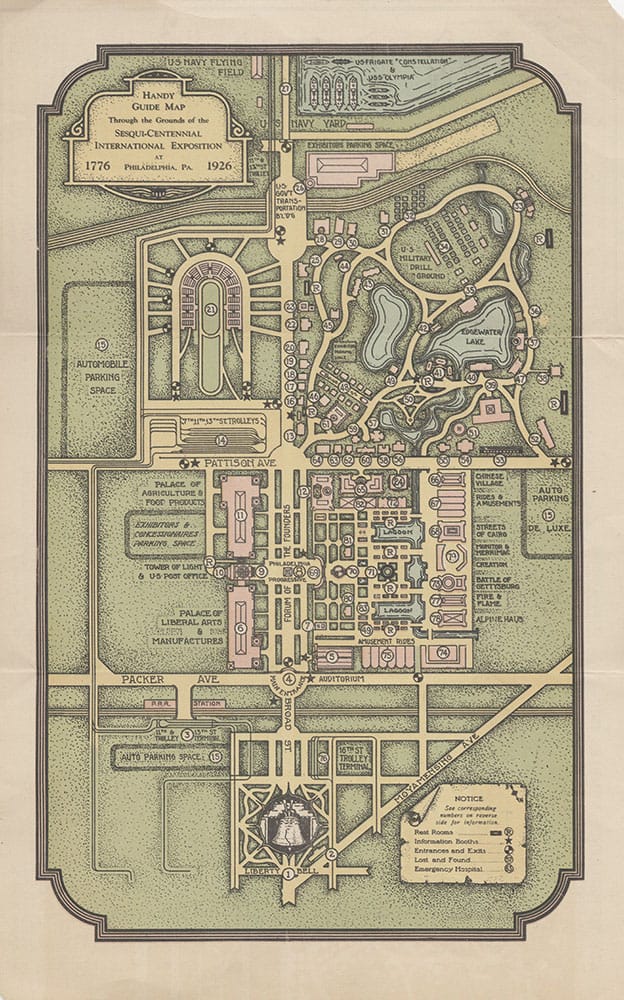
It did not go according to plan. The grounds were unfinished on opening day — by June 1, only about 655 of the planned exhibits were running. Then came the rain: 107 of the fair's 184 days were wet, some of the heaviest summer rainfall on record. Attendance fell millions short of projections, and the exposition closed deep in debt and ended up in receivership. The honest story — an ambitious civic flop — is itself a piece of Pennsylvania history worth knowing, and a reason the 1926 fair rarely appears in family lore the way 1876 did.
The fair may have struggled, but your ancestor's records from 1926 are excellent. Here is what survives.
Why 1926 Is a Records-Rich Year
The early twentieth century is where genealogical records become abundant and specific. Government record keeping expanded enormously — the draft for World War 1, Social Security, standardized naturalization after 1906, and a detailed federal census all converge in this period. For the country it was also the end of mass immigration, so there are fewer passenger lists and naturalization files to sift through.
The Records That Document 1926
The 1920 and 1930 Federal Census
The two censuses that bracket 1926 are among the most useful in the series. The 1920 census records each person's name, age, sex, race, relationship to head of household, marital status, immigration year, naturalization status, occupation, and birthplaces of the person and their parents.
The 1930 census adds age at first marriage and asks whether the household owned a radio set — a small detail that captures the modernizing 1920s. Both name every household member and place your family precisely on either side of the Sesquicentennial year.
For immigrant families, the immigration-year and naturalization-status columns are a direct bridge to passenger lists and naturalization files.
World War I Draft Registration Cards
This is the record most researchers underuse for the era. Between 1917 and 1918, the United States required men across a wide age range to register for the draft. The draft was mandatory, covering most adult Pennsylvania men who were alive in 1926. The cards record full name, home address, date and place of birth, occupation and employer, nearest relative, and a physical description. For a man in his thirties, forties, or fifties in 1926, the draft card he filled out a few years earlier may be the single best snapshot of who he was: where he lived, who he worked for, who his closest relative was, and exactly when and where he was born.
WWI draft registration cards are indexed and digitized on Ancestry, FamilySearch, and Fold3.
Social Security Records (SS-5 Applications)
Social Security began in 1936, ten years after the Sesquicentennial, but it documents the same generation. The original application — the SS-5 — asks for the applicant's full name, date and place of birth, and the full names of both parents, including the mother's maiden name. For an ancestor who was an adult in 1926 and lived into the late 1930s or beyond, the SS-5 often supplies a mother's maiden name available nowhere else. Request these through the Social Security Administration, and check the Social Security Death Index and the SSA's FOIA request service to get a copy for a small fee.
Immigration and Passenger Lists
If your ancestor immigrated through the Port of Philadelphia or another port and settled in Pennsylvania, the passenger lists from 1906 through 1926 are very detailed. After 1906, manifests record age, occupation, last residence, nearest relative in the home country, final destination, and a physical description. Paired with post-1906 naturalization files — which became standardized and far more informative — passenger records can carry an immigrant ancestor's story back across the ocean.
A Step-by-Step Approach for 1926
- Read the 1920 and 1930 census together to bracket the Sesquicentennial year and capture immigration and naturalization status.
- Find the WWI draft registration card for every adult man in the family — it pins down exact birth date and place, employer, and nearest relative.
- Request the SS-5 application for ancestors who lived into the Social Security era; it often supplies a mother's maiden name.
- Trace immigrant ancestors through post-1906 passenger lists and naturalization files, using the census immigration columns as a guide.
- Add city directories and newspapers, which remained rich in this period, to fill the years between censuses.
Pennsylvania-Specific Considerations
Naturalization improved after 1906. Records created from 1906 onward are standardized and detailed, often including the immigrant's exact birth date and place, arrival information, and family members. These are held at the National Archives and, for some courts, the Pennsylvania State Archives.
The Port of Philadelphia matters. Philadelphia declined as a major immigration port in the 1900s, but ancestors who arrived there have detailed manifests. Don't assume every immigrant came through New York.
The draft card is your anchor. For a male ancestor of this generation, start with the WWI draft registration card. It is often the most information-dense single document you will find for him.
Frequently Asked Questions
What was the Sesquicentennial Exposition of 1926?
The Sesquicentennial International Exposition was a World's Fair held in South Philadelphia from June 1, 1926, to mark one hundred and fifty years of American independence. It was beset by an unfinished site and constant rain — 107 of its 184 days were wet — drew far fewer visitors than expected, and closed at a major financial loss.
What records document a Pennsylvania ancestor in 1926?
The 1920 and 1930 federal censuses bracket the year and name every household member. World War I draft registration cards (1917–1918) capture most adult men with birth date and place, employer, and nearest relative. Social Security SS-5 applications (from 1936) often supply a mother's maiden name. Post-1906 passenger lists and naturalization files document immigrants in detail.
What do World War I draft cards tell you?
WWI draft registration cards record full name, home address, exact date and place of birth, occupation and employer, nearest relative, and a physical description. For a man who was an adult in 1926, the card is often the most detailed single record of his identity. They are digitized on Ancestry, FamilySearch, and Fold3.
How do I get a Social Security SS-5 application?
The SS-5 is the original Social Security application, available by request from the Social Security Administration through FOIA. It records the applicant's full name, date and place of birth, and both parents' full names including the mother's maiden name. Start with the Social Security Death Index to confirm a person's Social Security number and death date.
Where did immigrants to Pennsylvania arrive?
Many came through the Port of Philadelphia, a major immigration port, though others arrived via New York and traveled to Pennsylvania. Post-1906 passenger manifests are detailed, recording age, occupation, last residence, and nearest relative abroad. Pair them with standardized post-1906 naturalization files.