Where Was Your Pennsylvania Ancestor in 1826? Researching the Jubilee Year
Researching a Pennsylvania ancestor in 1826? The 1820s left thin records — here's how tax lists, church registers, and deeds fill the gap before 1850

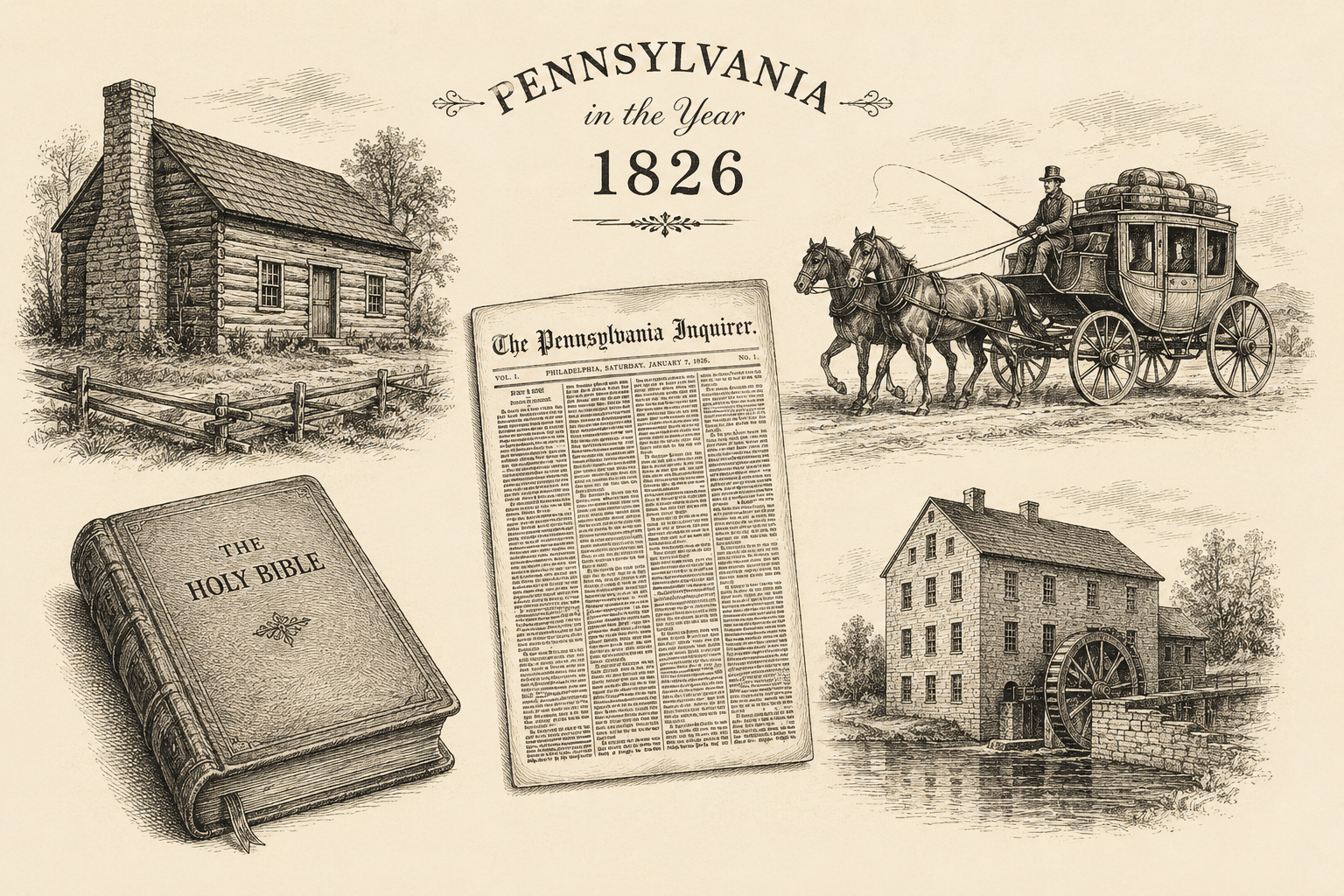
In 1826, the United States turned fifty, and Pennsylvania researchers face one of the hardest gaps in American genealogy: the records that survive from this decade rarely name the people you are looking for. Pennsylvania had no statewide birth, marriage, or death registration until 1906, and the federal census before 1850 listed only the head of each household by name. Everyone else — wives, children, aging parents, the enslaved and free Black members of a household — appears as a tally mark in an age column.
That gap is real, but it is not a dead end. For an ancestor living in Pennsylvania around 1826, the records that fill the silence are tax lists, church registers, and land papers — and once you know how to read them together, you can place a person in a specific township in a specific year even when no census names them. This post shows you how.
What 1826 Was: The Fiftieth Anniversary
The fiftieth anniversary of independence was the country's first great national milestone, and the nation treated it as providence. On July 4, 1826 — the exact half-century mark — both John Adams and Thomas Jefferson died within hours of each other, Jefferson at Monticello in the early afternoon and Adams in Massachusetts that evening. Newspapers across Pennsylvania carried the news for weeks and read the coincidence as a sign. Towns held jubilee processions, fired fifty-gun salutes, and printed commemorative broadsides.
Your ancestor was somewhere in that country in 1826 — likely on a farm, in a trade, or in one of Pennsylvania's growing towns. The anniversary is the doorway. The records are how you walk through it.
Why 1826 Is Hard: The Two Big Gaps
Two facts shape every search in this decade, and naming them up front saves years of frustration.
No statewide vital records. Pennsylvania did not require birth, marriage, or death registration until 1906. A few counties kept marriage records earlier, and some kept them briefly between 1852 and 1855, but for 1826 there is no government birth, marriage, or death certificate to find. The substitute is church records — and that substitution is the single most important method in early Pennsylvania research.
Pre-1850 census names only the head of household. The 1820 and 1830 federal censuses list one name per household — usually the husband or father — and then count everyone else in age-and-sex brackets. A household headed by "John Miller" in 1830 might contain a wife, six children, and an elderly parent, none of them named. You can learn a great deal from those tally marks, but you cannot get names from the census alone.

The Records That Fill the Gap
County Tax Lists: The Pre-Census Census
Pennsylvania's county tax assessment lists are the most powerful and most underused source for this period. Counties assessed taxes on land, occupations, and "freemen" (single men over twenty-one who owned no land), and they did it almost every year. That means a tax list can place your ancestor in a specific township annually — far more often than the census, which only comes around every ten years.
Tax lists tell you more than presence. They show whether your ancestor owned land or rented, what trade he followed, how many acres and animals he held, and — crucially — when a son first appears as a freeman, which brackets his age and tells you he reached twenty-one. When a man disappears from the list and his widow or son appears in his place, you have a death window without a death record.
Pennsylvania tax records for this time period are in the original county assessment books that survive at the Pennsylvania State Archives and in many county courthouses and historical societies. Few are on Ancestry and FamilySearch.
Church Records: Your Vital Records
Because Pennsylvania kept no civil vital records in 1826, the church register is the birth, marriage, and death record. The challenge is that Pennsylvania was the most religiously diverse state in the country, so the right register depends entirely on your ancestor's denomination and ethnic community.
Lutheran and German Reformed congregations kept detailed baptism and marriage registers, often in German script, and these are among the richest sources for the large Pennsylvania German population. Quaker (Friends) monthly meeting records are exceptionally complete and document births, marriages, deaths, removals between meetings, and disownments — a genealogical gift unmatched by any other denomination. Presbyterian, Mennonite, Moravian, Catholic, and Brethren congregations each kept their own records in their own forms.
The practical method: identify your ancestor's likely denomination from their ethnic community and county, locate the specific congregation nearest their township, and find whether its register survives in print, at a local historical or genealogical society, at a denominational archive, or on FamilySearch. Many Pennsylvania church registers were transcribed and published in the early twentieth century, which is often the fastest way in.
Land and Warrant Records
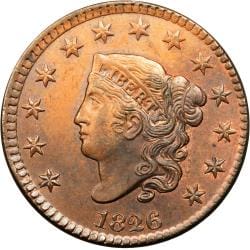
If your ancestor owned land in 1826, the deed, warrant, and survey records place them precisely and often name family members. Pennsylvania's land system descended from the proprietary system of the Penn family — land moved from warrant to survey to patent — and by 1826 much of this was administered by the Commonwealth's Land Office. Recorded deeds at the county courthouse capture sales between individuals and frequently name spouses (in dower releases) and heirs (in estate divisions).
A deed that conveys land "from John Miller and Mary his wife" gives you a wife's first name the census never would. A deed dividing a deceased man's land among his children names the children. For the 1820s, county recorded deeds and Orphans' Court partition records are some of the few sources that name women and children directly.
Reading the 1820 and 1830 Census Anyway
Even though the pre-1850 census names only the head of household, do not skip it. The age-and-sex brackets let you reconstruct the shape of a family: how many sons and daughters in which age ranges, whether an older generation lived in the home, whether the household included free or enslaved people of color. Cross-referenced against tax lists and church baptisms, those brackets turn from anonymous tallies into a named family. The census tells you who was in the house; the church register tells you their names; the tax list tells you what year it was true.
A Step-by-Step Approach for 1826
- Establish the county and township as they existed in 1826 — Pennsylvania county boundaries shifted constantly before 1850, so confirm which county held your ancestor's land at the time, not today.
- Work the tax lists year by year in the Pennsylvania Archives 3rd series and the original county assessment books, building a year-by-year presence for your ancestor and watching for sons reaching freeman age.
- Identify the denomination and congregation from the ethnic community, then locate and search the church register for baptisms, marriages, and burials in the 1820s.
- Pull recorded deeds and Orphans' Court records at the county courthouse to capture wives' and children's names that appear nowhere else.
- Read the 1820 and 1830 census brackets against everything above to reconstruct the full household.
Pennsylvania-Specific Considerations
County boundaries moved. A township that was in one county in 1826 may be in a different one today. Establish the historical county before searching county-level records.
German-language records are common. Lutheran, Reformed, Mennonite, and Moravian registers from this period are frequently in German, and names were spelled phonetically. Search multiple spelling variants and be ready to read or translate German script.
Tax lists are your best friend. When the census fails and no church record survives, the annual tax assessment is often the only source that places your ancestor in a specific place in a specific year. Most researchers overlook it. Don't.
For the complete guide to the records, communities, and county-by-county strategies that shaped early Pennsylvania research, see Colonial Pennsylvania Genealogy Research: Communities and Revolutionary Era Records, 1681–1790 by Denyse Allen. For Pennsylvania vital records and their substitutes specifically, see Pennsylvania Vital Records Research.
Frequently Asked Questions
Did Pennsylvania keep birth and death records in 1826?
No. For 1826, church baptism, marriage, and burial registers serve as the vital records. A few counties kept marriage records earlier or briefly in the 1850s, but there is no government certificate to find for the 1820s.
Why does the 1820 and 1830 census only show one name per household?
Federal censuses before 1850 recorded only the head of household by name and counted everyone else in age-and-sex brackets. The 1850 census was the first to name every free person in a household. For 1826-era research, you use the brackets to reconstruct the family's shape and turn to tax lists and church records for the actual names.
What are Pennsylvania tax lists and where do I find them?
County tax assessment lists recorded landowners, tradesmen, and single freemen, usually annually. They place an ancestor in a specific township year by year. Some original assessment books survive at the Pennsylvania State Archives and in county courthouses and historical societies.
How do I find my ancestor's church records in Pennsylvania?
Identify the denomination from your ancestor's ethnic community and county, locate the specific congregation nearest their township, and check whether its register survives in print, at a local genealogical or historical society, at a denominational archive, or on genealogy website (Ancestry, FamilySearch, FindmyPast, or MyHeritage). Lutheran, Reformed, and Quaker records are especially well preserved for this period.
How do I find a wife's or child's name for the 1820s?
Recorded deeds and Orphans' Court partition records (dividing an estate among named children) are among the few sources that name women and children directly in this period. Pair them with church baptism and marriage registers.
© 2019–2026 PA Ancestors L.L.C. and Denyse Allen. All Rights Reserved.
About PA Ancestors: The authoritative resource for Pennsylvania genealogy research — vital records, county courthouses, archives, probate, land records, military records, and immigration research across all 67 Pennsylvania counties. Founded by Denyse Allen, Pennsylvania genealogy researcher and author.
More Pennsylvania Research: paancestors.com