How to Research at the DAR Library in Washington, D.C.: A Genealogist's Guide
The DAR Library closes in July 2026 for a multi-year renovation. Plan your research trip now. Insider tips on getting there, using the collections, accessing lineage applications, and what to bring.

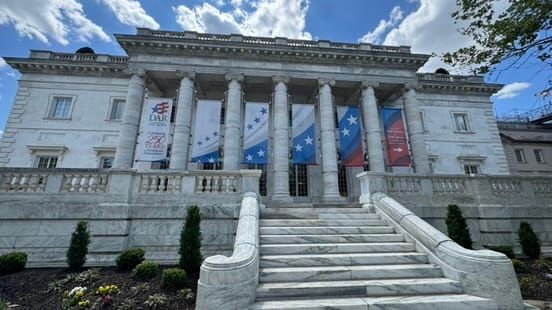
The Daughters of the American Revolution (DAR) Library is one of the largest genealogical research libraries in the country. It holds over 225,000 books, more than 20,000 volumes of transcribed local records, thousands of manuscript items, and the Genealogical Research System (GRS) with its searchable databases of lineage society applications. If you have Revolutionary War ancestors or you are researching any American family line, a trip to the DAR Library belongs on your research plan. And it needs to happen before July.
This guide covers everything you need to know before you go, from getting there to getting the most out of your research day.
Hours, Admission, and What It Costs
The DAR Library is free and open to the public. There is no admission fee and no membership requirement.
Hours:
- Monday through Friday: 8:30 AM to 4:00 PM
- Saturday: 9:00 AM to 5:00 PM
- Closed Sundays and all federal holidays
The Library also closes during the week of the annual DAR Continental Congress (typically late June or early July), when only registered Congress attendees can access it.
One important note: the DAR headquarters hosts special events throughout the year, including receptions, galas, and private functions. These events can delay the Library's opening or close it early. When I visited, a wedding party came through the building for photos between their ceremony and reception in another part of the headquarters. The next morning they were doing an open house the the library delayed opening for two hours. It is a working event space, not a quiet academic library. Plan for flexibility.
Getting to the DAR Library
The DAR Library sits within steps of the White House in downtown Washington, D.C. There is no convenient parking nearby. Street parking is metered, limited, and competitive. If you drive, download the ParkMobile app before your trip and be prepared to park in a garage on New York Avenue, Pennsylvania Avenue, or 17th or 18th Streets and walk from there.
By Metro: The closest station is Farragut West on the Blue, Orange, and Silver lines. Exit the station on 17th Street and walk south toward Constitution Avenue. Turn right on D Street. The walk is about 12 minutes and downhill, which helps when you are carrying a bag.
By Rideshare or Taxi: A Lyft, Uber, or cab is the easiest way to get a door-to-door drop-off. This is what I recommend, especially if you are carrying research materials or equipment. Tell the driver 1776 D Street NW and they will pull right up to the building.
Driving: Street parking is limited to two hours and strictly enforced. There are parking garages in the area, but given the location near the White House, garage parking is expensive and fills quickly. If you drive, plan to arrive early and be prepared to walk from wherever you end up parking.
Entering the Building
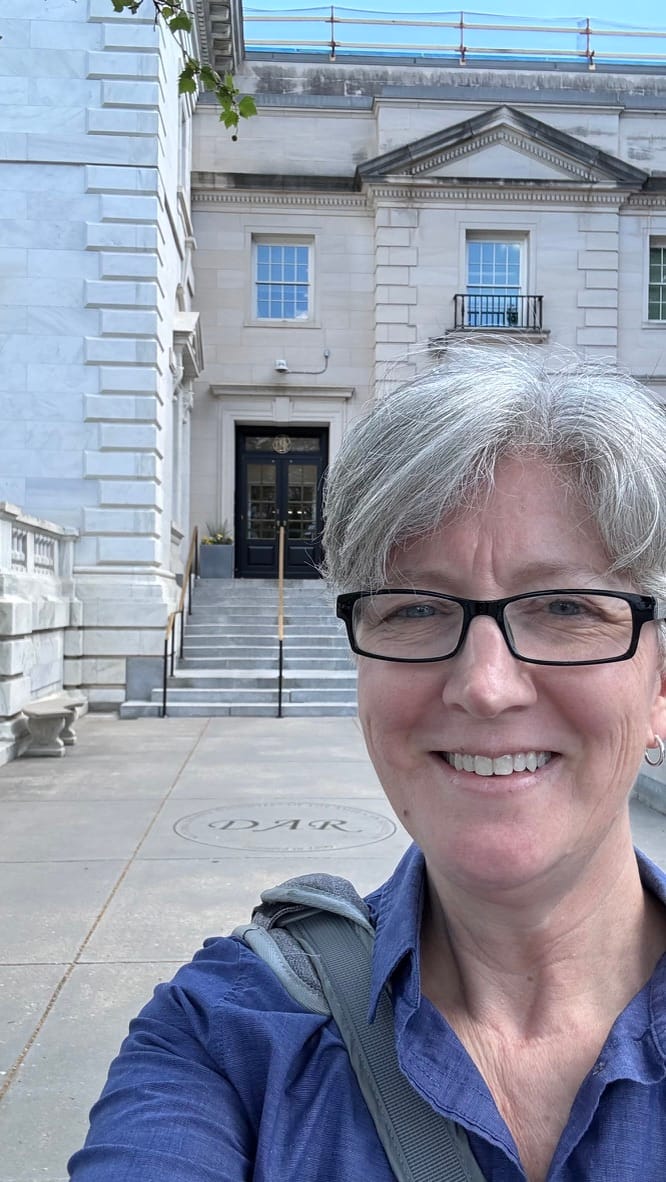
As you face the building from D Street, the entrance is to the right. Look for the sign above the door. There are about ten steps up to reach the entrance, so keep that in mind for accessibility.
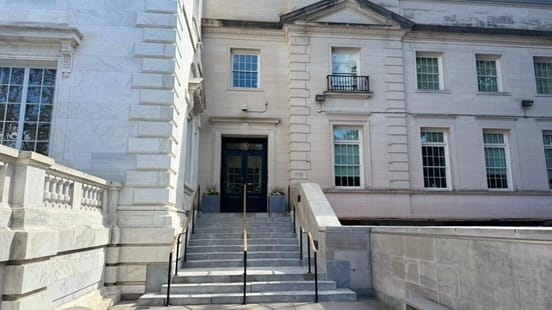
Inside, you will pass through a security checkpoint. There is a guard, a bag check, and a screening process. No food or beverages are allowed inside the Library. Leave your coffee in the car.
After security, you will pick up a visitor's pass at the front desk and proceed down the hall. The Library entrance is on the left. Before you reach it, you will pass a small display area where the DAR rotates exhibits of artifacts and documents from their collection.
Right now, the exhibit is worth a stop. For America's 250th anniversary, the DAR Museum has opened Revolution in Their Words, an exhibition that examines the nation's founding through firsthand accounts of the people who lived it. The exhibit draws on the DAR's own artifact and manuscript collections, along with loans from other museums. It presents perspectives from free and enslaved Black people, Native Americans, women, and soldiers on the front lines.
A companion display, Preserving Patriotism: The Declaration of Independence and Its Legacy at DAR, is on view in the Museum's Study Gallery. It brings together signatures of all 56 signers of the Declaration of Independence, exhibited in their entirety for the first time. Both exhibits run through March 27, 2027.
You will also find a restroom and a water bottle filling station near the security checkpoint. Since you cannot bring beverages in, this is where you will refill during breaks.
Inside the Library: What to Expect
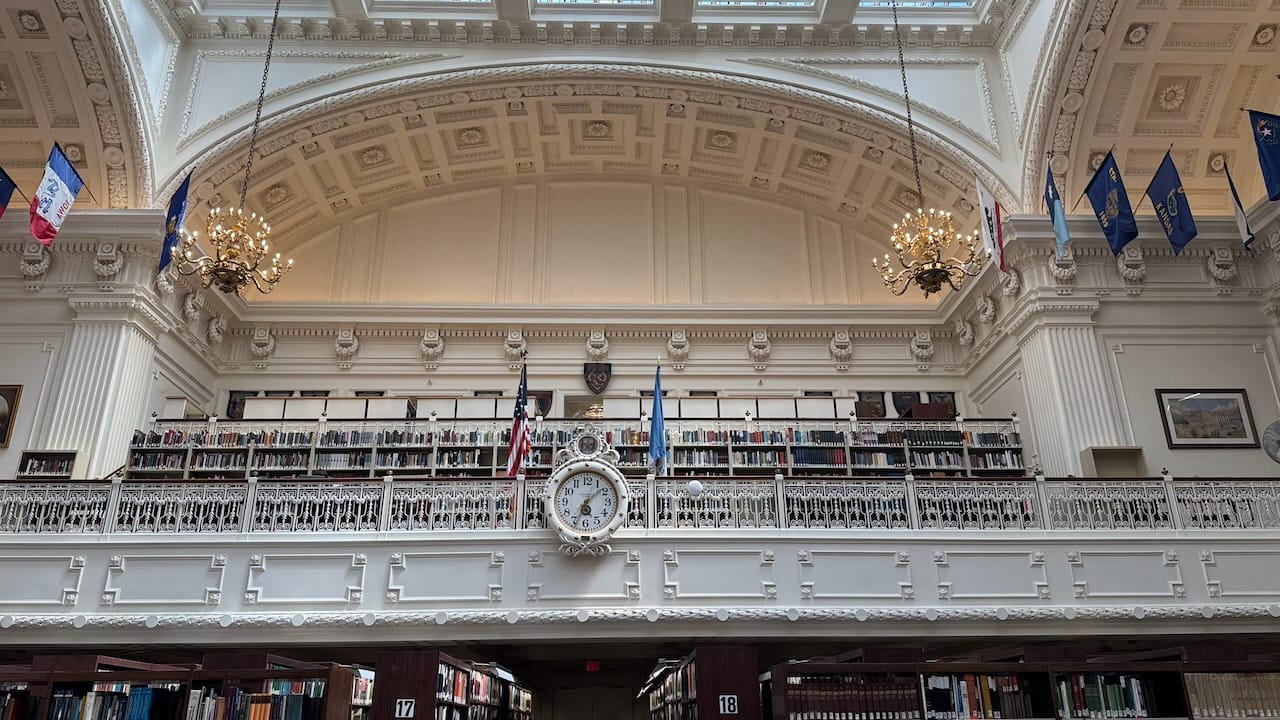
The DAR Library is comfortable for a full day of research. The seating is good, the lighting is excellent, and the research tables have plenty of electrical outlets for charging a laptop, phone, or iPad. There is fast, free WiFi available so you can log in from your personal laptop and work between the physical collection and online databases without any trouble. People talk at a low conversational volume rather than a whisper. It feels more like a working research room than a silent study hall.
The staff rotates roughly every two hours at the front reference desk, so if you are there for the full day you will interact with several different librarians. All of them are knowledgeable and genuinely helpful. They will help you locate materials, navigate the catalog, and find what you need in the collection.
That said, the staff is not there to do your research for you. Come prepared with your notes, your research questions, and a plan. Know which ancestors you are looking for and what records you need before you arrive. The more specific your questions, the more the librarians can help you find the right sources quickly.
Browsing the Collection
The Library's main collection is in open stacks that you can browse freely. Downstairs, the shelves are organized alphabetically by state. If you are researching Pennsylvania ancestors, head to the P section and start pulling volumes.
The collection includes published county histories, church record transcriptions, cemetery records, tax lists, probate abstracts, and thousands of other genealogical reference works organized by the state where the records originated.
To the right of the main stacks is a separate family history section. This is where the DAR holds genealogies and family histories that members have submitted over the decades. If someone has compiled a history of your surname and donated it to the DAR, this is where you will find it.
Do not re-shelve books. When you are finished with a volume, place it on the book carts located along the center aisle. The staff will re-shelve it in the correct location.
The Genealogical Records Committee (GRC) Reports
The GRC Reports are one of the DAR Library's most valuable collections for genealogists. This 20,000+ volume set contains transcriptions of local records compiled by DAR chapters across the country: probate records, court records, land records, Bible records, cemetery transcriptions, family genealogies, and Revolutionary War service documentation.
These are often the only transcriptions that exist for certain local records, especially for smaller counties and rural areas. For Pennsylvania researchers, the GRC Reports can fill gaps that no other repository covers.
Accessing Lineage Society Applications
This is one of the primary reasons genealogists travel to the DAR Library, and it is worth understanding how it works before you arrive.
The Library has six computers available for looking up DAR membership and supplemental applications through the Genealogical Research System (GRS). Only six. This is a bottleneck because viewing lineage applications is one of the most popular activities in the Library. Plan accordingly and be patient.
Here is the process:
- Search the GRS on one of the six computers to find the application you need. You can search by ancestor name, member name, or national number.
- Preview the file on screen. This is the key advantage of being on-site. You get to see the full application, the lineage page, the references page, and the ancestor's services page before you commit to purchasing a copy.
- Print the file if you want a copy. A complete application file costs $15, the same price as ordering a record copy from home. The difference is that here, you can preview it first.
- Printouts are held behind the librarian's desk. You do not take them with you as you print them. At the end of your research day, you collect all your printouts and pay at once.
- They accept credit cards or cash for copies and printouts.
If you are researching a specific patriot ancestor, search the GRS for every application that names that ancestor. Different applicants traced different lines of descent and may have used different supporting documentation. Viewing multiple applications for the same patriot can reveal sources you did not know existed.
Photo and Copy Policies
You can make photocopies from the Library's collection for a per-page charge. You can also pay a photo fee at the reference desk and use your own digital camera to photograph pages from books and records. Handheld scanners are not permitted.
Ask the librarian at the reference desk about the current fees and policies when you arrive, as these can change.
What to Bring
- Your research plan. Know which ancestors, which records, which questions. Do not figure it out when you get there.
- Printed copies of any existing documentation you are working from: family group sheets, census records, DAR or SAR application copies, source inventories.
- A laptop, tablet, or phone for checking online databases and taking notes. Outlets are available at the tables.
- A camera (phone camera works fine) for photographing records. Pay the photo fee at the reference desk.
- Pencils. Some archival reading rooms require pencils rather than pens near original documents. Bring both.
- A water bottle. The bottle filling station near security is your only hydration source since no beverages are allowed inside.
- Cash or credit card for copies, printouts, and photo fees.
- Patience and flexibility. Events in the building can affect hours. Computer availability for GRS access is limited. The research will take longer than you expect.
What Not to Bring
- Food or coffee/tea (none allowed past security)
- Handheld scanners (not permitted in the Library)
- An assumption that you will get through everything on your list. Prioritize your most important research targets and work through them in order.
Planning Your Research Before You Go
The DAR's website offers several tools to help you prepare:
- The DAR Library Catalog lets you search the collection remotely so you can identify books and volumes relevant to your research before you arrive.
- The Genealogical Research System (GRS) is partially available online at services.dar.org. You can search the Ancestor Database, Member Database, and some GRC records from home to identify the application numbers you want to pull on-site.
- The DAR Library's collection guides describe what is available by state and record type.
Doing this homework before your trip means you walk in the door with a list of specific call numbers and application numbers instead of spending your first two hours figuring out what they have.
The Library Is Closing: Why You Need to Go Now
In July 2026, the DAR Library will close its doors for a multi-year renovation. The full book collection of over 225,000 volumes will be moved offsite. The historic reading room will undergo a complete restoration of its plasterwork, skylights, floors, and shelving.
This is not a brief closure. This is a building-wide project that will take years to complete. You can read the DAR's full announcement at dar.org/collections/library/libraryonthemove. When the Library reopens, it will be beautiful. But between now and then, the open stacks you can browse today, the GRC Reports you can pull off the shelf, the family histories you can page through by hand will not be accessible.
Some of the DAR's digital resources, including the Genealogical Research System, should remain available online during the renovation. But the on-site experience of browsing the stacks, pulling volumes by state, and previewing lineage applications on the Library's computers before purchasing them will not be available for the foreseeable future.
If you have been meaning to make this trip, the window is closing. The Library is open Monday through Friday, 8:30 AM to 4:00 PM and Saturdays 9:00 AM to 5:00 PM through the end of June. After that, you will be waiting years for your next chance.
The timing is remarkable. The 250th anniversary of the Declaration of Independence is two months away. The Revolution in Their Words exhibit is on display in the building. The DAR is actively digitizing Revolutionary War records and adding them to the GRS. And the Library is free.
Go with a plan. Bring your research. Ask the staff for help. Give yourself a full day. And do it soon.
The DAR Library is located at 1776 D Street NW, Washington, D.C. 20006. Free admission. Open Monday through Friday 8:30 AM to 4:00 PM, Saturday 9:00 AM to 5:00 PM. Closed Sundays and federal holidays.
For more information: dar.org/collections/library
© 2019–2026 PA Ancestors L.L.C. and Denyse Allen. All Rights Reserved.
About PA Ancestors: The authoritative resource for Pennsylvania genealogy research — vital records, county courthouses, archives, probate, land records, military records, and immigration research across all 67 Pennsylvania counties. Founded by Denyse Allen, Pennsylvania genealogy researcher and author.
More Pennsylvania Research: paancestors.com